Stop the Water Immediately
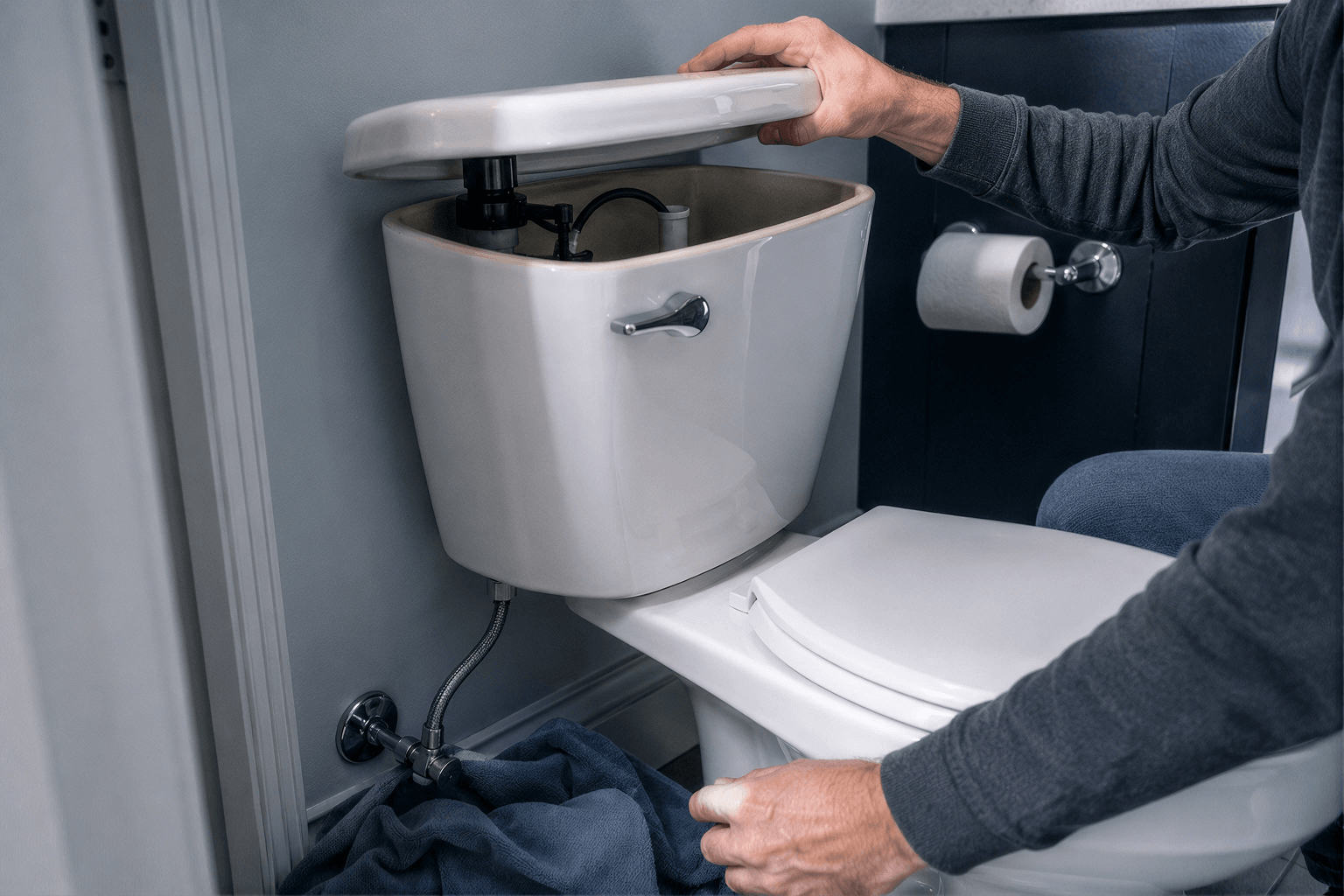
Stop a toilet overflow fast: remove the tank lid and push down on the flapper (rubber disc at bottom) or lift the float to stop water flow. Then turn off the supply valve behind the toilet (clockwise). If the valve is stuck, turn off your main water shut-off. Act within seconds to minimize damage.
Remove the tank lid and push down on the flapper—the rubber disc at the bottom—to stop water from entering the bowl. Alternatively, lift the float to stop the fill valve. Then turn off the supply valve behind/beside the toilet (turn clockwise). If the valve is stuck, turn off water at the main shut-off.
Contain the Overflow
Contain the overflow with towels to prevent water from spreading to other rooms or seeping through floors to rooms below. Prioritize stopping the spread over immediate cleanup. Remove bath mats and anything absorbent. Water damage to subfloors and ceilings below happens quickly.
Use towels to contain water and prevent it from spreading to other rooms or seeping through floors. If the overflow is significant and reaching other areas, prioritize stopping the spread over cleanup. Remove bath mats and anything that can absorb water.
Attempt to Clear the Clog
Once water flow stops, use a flange plunger (with extended flap) to clear the clog. Create a seal over the drain and plunge vigorously 15-20 times. If water starts draining, you've likely cleared it. Test with a careful flush—be ready to stop water again if the bowl rises.
Once water flow stops, try a plunger. Use a flange plunger (the kind with an extended flap) for toilets. Create a seal and plunge vigorously 15-20 times. If water begins to drain, you've likely cleared the clog. Flush carefully to test—be ready to stop the water again if it rises.
When to Call a Plumber
Call a plumber if plunging doesn't clear the clog, the toilet overflows repeatedly, you see or smell sewage, or multiple fixtures are backing up (main line problem). Clean water overflow needs basic disinfectant cleanup. Sewage overflow requires professional cleaning due to health hazards.
Call a professional if: plunging doesn't clear the clog, the toilet overflows repeatedly, you see or smell sewage, or multiple fixtures are backing up (indicating a main line problem). For toilets with clean water overflow, basic cleanup with disinfectant is usually sufficient. For sewage overflow, professional cleaning is recommended.
Need Professional Help Now?
Plumbing problems get worse over time. Our network of licensed plumbers is available 24/7 for emergency service.
Call (833) 855-0466