Water Heater Lifespan Expectations
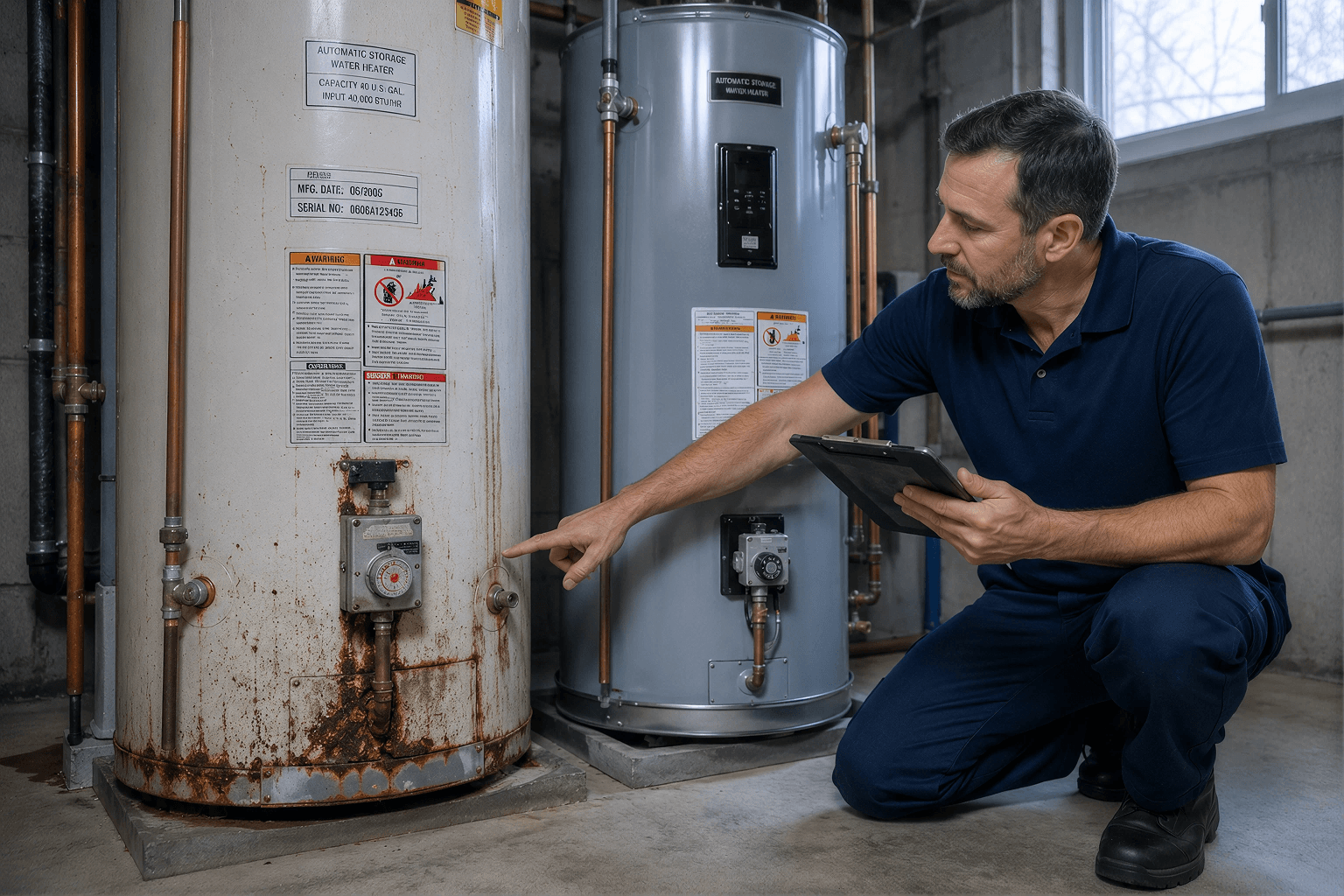
Tank water heaters last 8-12 years on average; tankless units last 15-20+ years. Hard water, lack of maintenance, and heavy usage shorten lifespan. Find your water heater's age by checking the serial number—most brands encode the manufacture date in the first four characters.
Traditional tank water heaters last 8-12 years on average. Tankless units last 15-20+ years. Actual lifespan depends on: water quality (hard water shortens life), maintenance frequency, usage patterns, and installation quality. Check the serial number for manufacture date—most brands encode the date in the first four characters.
Age-Based Replacement Guidelines
Under 8 years: repair unless the tank itself is leaking. 8-10 years: repair if cost is under 50% of replacement cost. Over 10 years: strongly consider replacing for any significant issue. Over 12 years: replace—the unit is on borrowed time. Tankless units can be repaired longer.
Under 8 years: Repair unless the tank is leaking. 8-10 years: Repair if cost is under 50% of replacement. Over 10 years: Strongly consider replacement for any significant repair. Over 12 years: Replace—the unit is on borrowed time. These guidelines assume standard tank water heaters; tankless units can reasonably be repaired longer.
Warning Signs Replacement Is Needed
Replace your water heater when you see: rusty hot water (internal corrosion), tank body leaks (not just fittings), persistent rumbling after flushing (severe sediment), or insufficient hot water despite adjustments. Multiple component failures in an older unit signal systemic deterioration requiring replacement.
Rusty water from hot water taps indicates internal tank corrosion—once the tank rusts through, leaks follow. Rumbling or banging that persists after flushing indicates severe sediment buildup. Leaks from the tank body (not fittings) mean the tank has failed. Insufficient hot water despite thermostat adjustments suggests failing heating elements in an aging unit. Multiple component failures indicate systemic deterioration.
Repair vs Replace Analysis
Compare repair cost divided by remaining life expectancy versus replacement cost divided by new unit lifespan. Example: $300 repair on a unit with 2 years left costs $150/year; a $1,200 new unit lasting 12 years costs $100/year. New units also save $100+ annually in energy costs.
Calculate: repair cost divided by remaining life expectancy. If the repair costs $300 and the unit might last 2 more years, that's $150/year. A new unit costing $1,200 lasting 12 years costs $100/year. Consider energy efficiency too—new units may save $100+/year in energy costs. Factor in the risk and inconvenience of unexpected failure.
Benefits of Proactive Replacement
Replacing your water heater before it fails lets you choose the best unit, schedule convenient installation, avoid emergency premiums, and prevent water damage from tank failure. Planned replacement costs less and causes less disruption than emergency replacement after a leak or complete failure.
Replacing before failure lets you: choose the best unit for your needs rather than whatever's available immediately, schedule installation at your convenience, avoid emergency service premiums, prevent water damage from tank failure, and start enjoying improved energy efficiency immediately. A planned replacement costs less and causes less disruption than an emergency.
Choosing a Replacement
Choose between tank ($800-$1,500 installed) and tankless ($1,500-$3,500 installed) water heaters. Tankless costs more upfront but lasts 15-20 years and saves 20-30% on energy. Consider fuel type (gas, electric, heat pump), proper sizing for your household, and energy efficiency ratings for long-term savings.
Consider: fuel type (gas, electric, heat pump), tank vs tankless, sizing for your household, and energy efficiency ratings. Tankless units cost more upfront but last longer and reduce energy bills. Heat pump water heaters offer significant energy savings but require specific installation conditions. A plumber can help you evaluate options for your specific situation.
Need Professional Help Now?
Plumbing problems get worse over time. Our network of licensed plumbers is available 24/7 for emergency service.
Call (833) 855-0466