Why Water Heater Maintenance Matters
Annual water heater maintenance extends lifespan from 8-12 years to 12-15+ years, improves efficiency by up to 20%, and prevents unexpected failures. Key tasks include flushing the tank, testing the pressure relief valve, and checking the anode rod—all simple procedures most homeowners can do themselves.
Regular maintenance extends water heater life from 8-12 years to 12-15+ years, improves energy efficiency (sediment buildup can increase energy use by 20%+), maintains hot water supply, and prevents unexpected failures. Most maintenance tasks are simple annual procedures that any homeowner can perform.
Annual Tank Flushing
Flush your water heater annually to remove sediment buildup that reduces efficiency and capacity. Turn off the heater, connect a garden hose to the drain valve, and drain until water runs clear. Areas with hard water should flush every 6 months. This 20-minute task can save hundreds in energy costs.
Sediment accumulates at the tank bottom over time, reducing efficiency and capacity. To flush: turn off the heater (gas valve to pilot, or electric breaker off), connect a garden hose to the drain valve and route to a drain, open the drain valve and let water flow until clear, close the valve and refill. Flush annually, or every 6 months in areas with hard water.
Testing the Pressure Relief Valve
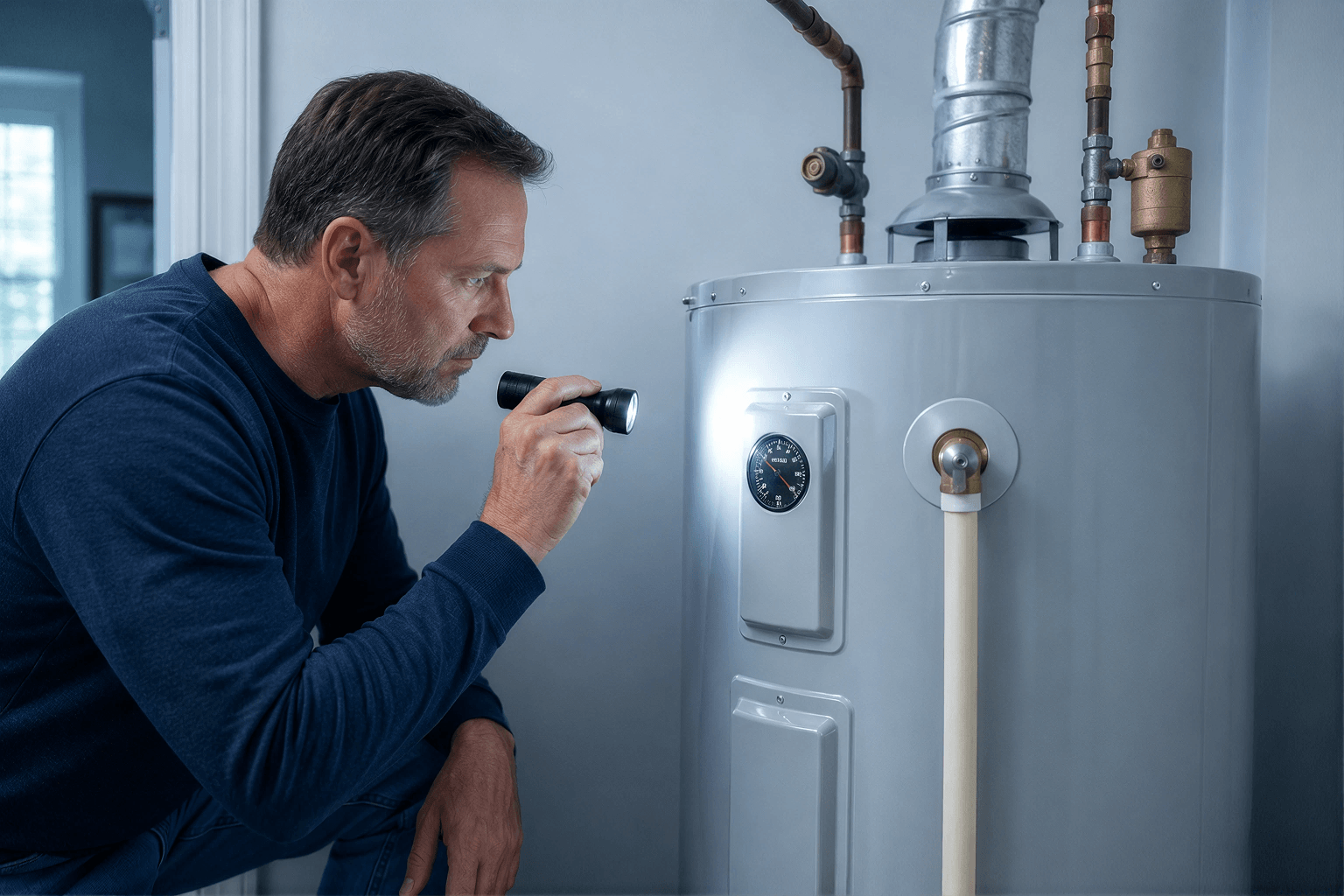
Test your water heater's T&P (temperature and pressure) relief valve annually. Place a bucket under the discharge pipe, lift the lever briefly, and verify water flows then stops when released. Replace the valve if it drips continuously or won't release—this critical safety device prevents dangerous pressure buildup.
The T&P (temperature and pressure) relief valve is a critical safety device. Test annually: place a bucket under the discharge pipe, lift the valve's lever briefly and let it snap back. Water should flow and stop. If it drips continuously or won't release, the valve needs replacement. Never cap or plug this valve—it prevents dangerous pressure buildup.
Checking the Anode Rod
Check your water heater's anode rod every 2-3 years. Replace it when more than 6 inches of core wire is visible or the rod is thinner than 1/2 inch. This $20-50 sacrificial part protects your tank from corrosion—replacing it can add 3-5 years to your water heater's life.
The anode rod protects your tank from corrosion by attracting corrosive elements. Once depleted, the tank itself begins corroding. Check every 2-3 years: remove the rod from the tank top (may require a socket wrench) and inspect. Replace when more than 6 inches of core wire is visible or the rod is less than 1/2 inch thick. This $20-50 part can add years to tank life.
Temperature Settings and Insulation
Set your water heater to 120°F—hot enough for sanitation, safe enough to prevent scalding, and optimal for energy efficiency. Higher settings increase sediment buildup and energy costs. Add an insulating blanket to older tanks and insulate the first 6 feet of pipes near the tank to reduce heat loss.
Set temperature to 120°F—hot enough for sanitation, cool enough to prevent scalding and reduce energy use. Higher settings increase sediment buildup and energy costs. Add an insulating blanket to older tanks (not needed on newer insulated models) to reduce standby heat loss. Insulate the first 6 feet of hot and cold pipes near the tank.
Signs Your Water Heater Needs Service
Call a plumber if you notice rusty or discolored hot water, persistent rumbling despite flushing, visible leaks or corrosion, a pilot light that won't stay lit, or insufficient hot water. Units over 10 years old showing any of these symptoms often need replacement rather than repair.
Call a professional for: rusty or discolored hot water, persistent rumbling or popping despite flushing, visible tank leaks or corrosion, pilot light that won't stay lit, insufficient hot water despite proper settings, and units over 10 years old showing any symptoms. These issues may require repair or indicate impending failure.
Need Professional Help Now?
Plumbing problems get worse over time. Our network of licensed plumbers is available 24/7 for emergency service.
Call (833) 855-0466