Diagnosing Low Water Pressure
Diagnose low water pressure by testing multiple fixtures: one fixture affected means a localized problem; whole house means main line, valve, or supply issues; hot water only means water heater problems. Check both hot and cold at multiple locations to identify the scope before attempting repairs.
First, determine if low pressure affects the whole house or specific fixtures. One fixture: the problem is localized to that fixture. One area: branch line or multiple fixture issues. Whole house: main line, valve, or supply problem. Test multiple fixtures on hot and cold—issues only with hot water point to the water heater. This diagnosis guides your next steps.
Single Fixture Issues
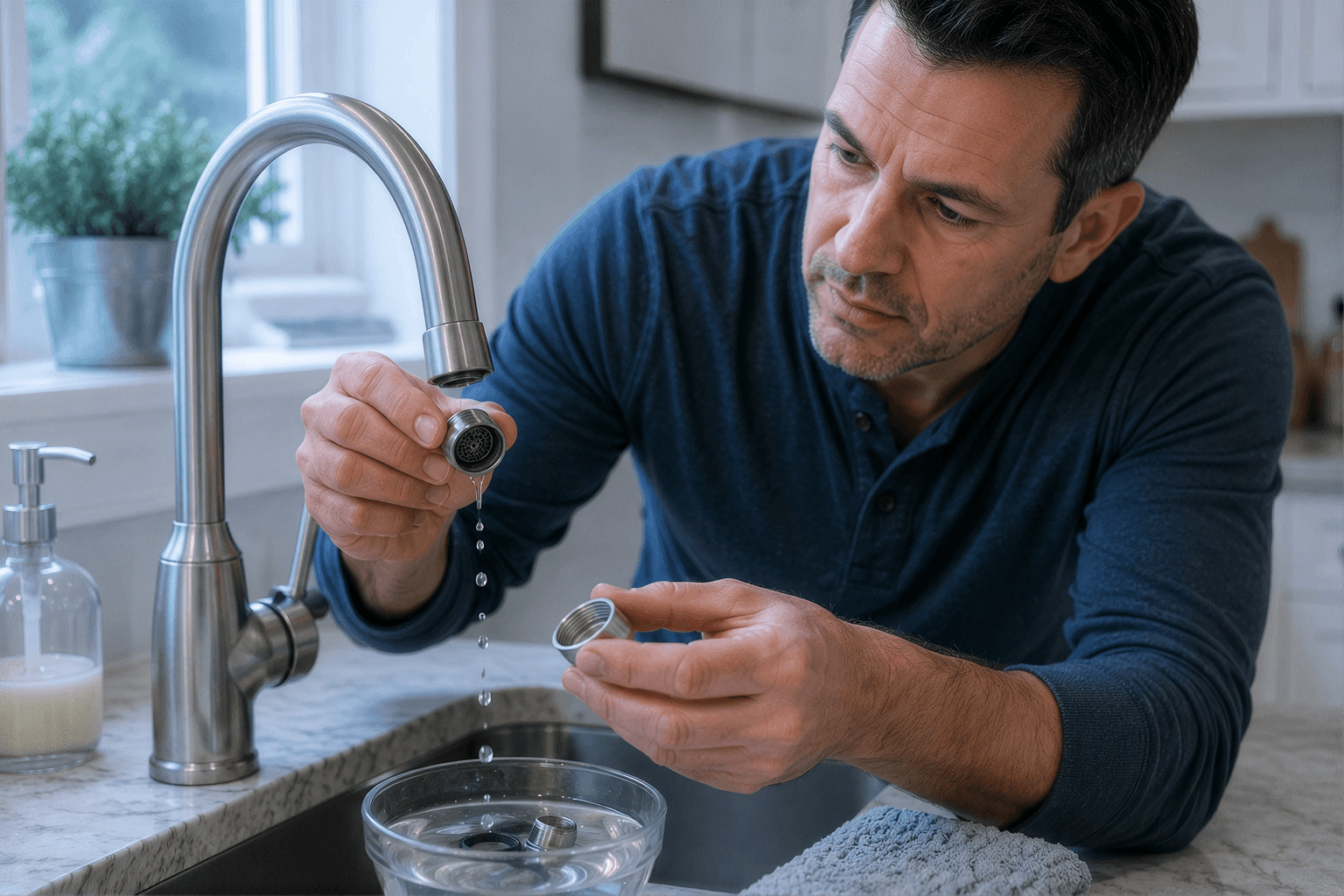
Low pressure at one faucet is usually a clogged aerator. Unscrew the aerator from the faucet tip, clean debris and mineral buildup, and reinstall. For showerheads, soak overnight in vinegar to dissolve deposits. If cleaning doesn't help, the faucet cartridge may need replacement—a DIY-friendly repair.
The most common cause is a clogged aerator—the screen at the faucet tip. Unscrew it, clean debris and mineral buildup, and reinstall. For showerheads, soak in vinegar overnight to dissolve mineral deposits. If cleaning doesn't help, the faucet cartridge or valve may need replacement. These are often DIY-friendly repairs with online tutorials for specific faucet models.
Water Heater Related Problems
Low pressure affecting only hot water points to your water heater. Check that the inlet valve is fully open. Sediment buildup restricts flow—flush the tank annually. A failed dip tube causes poor delivery. Corroded pipes near the water heater can restrict flow. Call a plumber for diagnosis if basic checks don't solve it.
If low pressure affects only hot water throughout the home, the issue is likely the water heater. Check: is the inlet valve fully open? Sediment buildup can restrict flow—annual flushing helps. The dip tube may have failed, causing poor hot water delivery. Corroded pipes near the water heater can restrict flow. A plumber can diagnose water heater-related pressure issues.
Whole House Pressure Problems
For whole-house low pressure: verify your main shut-off and meter valves are fully open, check for visible leaks, and inspect your pressure regulator (bell-shaped device near the main line) for needed adjustment or replacement. Corroded galvanized pipes progressively restrict flow. Check with neighbors—municipal issues cause temporary drops.
Check your main shut-off valve and meter valve—partially closed valves restrict flow. Look for visible leaks that could reduce pressure. If you have a pressure regulator (bell-shaped device near the main line), it may need adjustment or replacement. Corroded galvanized pipes progressively restrict flow over years. Municipal supply issues sometimes cause temporary pressure drops—check with neighbors.
When Pipe Replacement Is Needed
Homes with galvanized steel pipes often need repiping when corrosion narrows pipes over decades. Signs: rusty water, gradually declining pressure over years, visible pipe corrosion, and whole-house issues. Repiping costs $4,000-$15,000 depending on home size but permanently solves pressure problems.
Older homes with galvanized steel pipes often experience declining pressure as corrosion narrows the pipes. This can't be fixed without replacing the pipes (repiping). Signs include: rusty water, pressure that's declined over years, visible corrosion on exposed pipes, and multiple fixture issues throughout the home. Repiping is a significant investment but permanently solves the problem.
Professional Solutions
A plumber can measure actual water pressure (normal is 40-60 PSI), inspect pressure regulators, assess pipe condition with camera inspection, and identify hidden leaks. Solutions range from simple valve adjustments to full repiping. Professional diagnosis is worthwhile when DIY checks don't reveal the cause.
A plumber can: measure actual water pressure (should be 40-60 PSI), inspect the pressure regulator, assess pipe condition with camera inspection, identify hidden leaks affecting pressure, and recommend solutions ranging from simple valve adjustments to repiping. If DIY checks don't reveal the cause, professional diagnosis is worthwhile before the problem worsens.
Need Professional Help Now?
Plumbing problems get worse over time. Our network of licensed plumbers is available 24/7 for emergency service.
Call (833) 855-0466