Understanding Pipe Freezing Risk
Pipes freeze when temperatures drop below 20°F, with water expanding to create up to 2,000 PSI of pressure that bursts pipes. Most vulnerable: pipes in exterior walls, unheated garages, crawl spaces, attics, and near windows. A burst pipe releases 4-8 gallons per minute, causing thousands in water damage.
Water expands when it freezes, creating enormous pressure inside pipes—up to 2,000 PSI. This pressure bursts pipes, causing extensive water damage when they thaw. Pipes most at risk: exterior walls, unheated areas (garages, crawl spaces, attics), and pipes near windows or poorly insulated areas. Even brief exposure to temperatures below 20°F can freeze vulnerable pipes.
Insulate Vulnerable Pipes
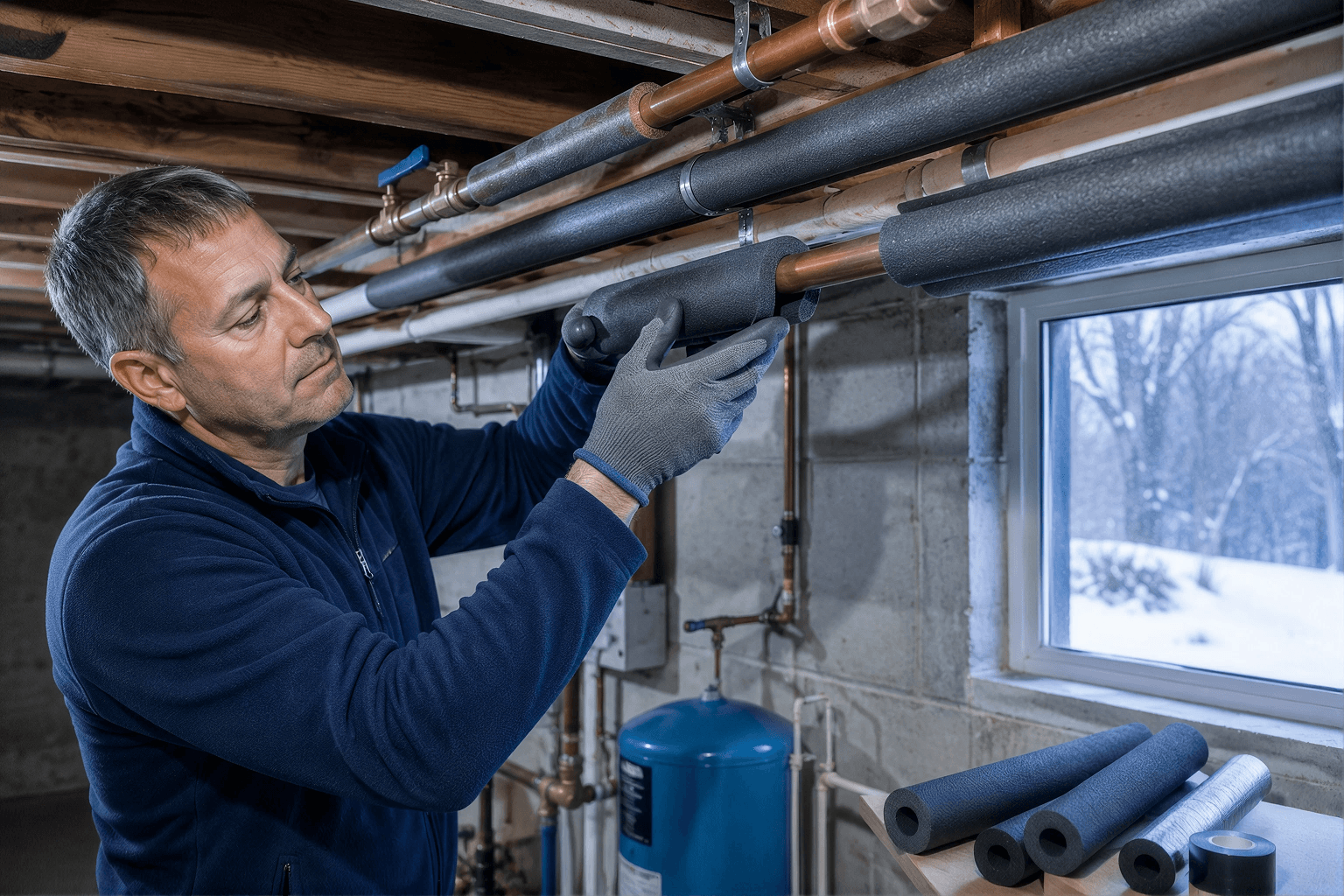
Insulate pipes with foam sleeves or fiberglass wrap—these cost a few dollars per foot and are highly effective. Focus on pipes in exterior walls, unheated areas, and attics. Add heat tape or heat cables for high-risk pipes. Seal nearby air leaks, as cold drafts dramatically accelerate freezing.
Pipe insulation is inexpensive and effective. Use foam pipe sleeves or fiberglass wrap on all exposed pipes in unheated areas. Pay special attention to pipes in exterior walls, near exterior doors, and in the attic. Heat tape or heat cables provide active warming for high-risk pipes. Seal air leaks near pipes—cold drafts accelerate freezing.
Before Cold Weather Arrives
Before winter: disconnect garden hoses, drain outdoor faucets and irrigation systems, install foam faucet covers, and locate your main water shut-off valve. Check insulation in attics, crawl spaces, and basements. Service your heating system to ensure it won't fail during freezing temperatures.
Disconnect garden hoses and drain outdoor faucets. Shut off and drain irrigation systems. Insulate outdoor faucet covers (foam covers cost a few dollars). Know your main water shut-off location in case of emergency. Check insulation in attics, crawl spaces, and basements. Service your heating system to ensure reliable operation during cold snaps.
During Freezing Weather
During freezing temperatures: keep thermostats at 55°F or higher (even when away), open cabinet doors under exterior-wall sinks, let faucets drip slightly to keep water moving, and keep garage doors closed. If leaving for extended periods, drain the plumbing system or have someone check daily.
Keep garage doors closed if pipes are present. Open cabinet doors under sinks on exterior walls to allow warm air circulation. Let faucets drip slightly during extreme cold—moving water is less likely to freeze. Keep thermostats at 55°F or higher, even when away. If leaving for extended periods in winter, consider draining the plumbing system or having someone check daily.
Signs of Frozen Pipes
Signs of frozen pipes: no water or reduced flow from faucets, frost visible on exposed pipes, and unusual smells from drains (ice blocks venting). Bulging or cracked pipes are emergencies—the pipe has likely burst and will flood when it thaws. Call a plumber immediately if you see bulging.
No water or reduced flow from faucets is the most obvious sign. Frost visible on exposed pipes indicates freezing. Strange smells from drains may occur as ice blocks the venting. Bulging or cracked pipes are emergency situations—the pipe has likely already burst and will flood when thawed.
What to Do If Pipes Freeze
If pipes freeze: turn off your main water valve, open faucets to relieve pressure, and thaw with a hair dryer, heat lamp, or portable heater—never open flames. Start thawing at the faucet and work toward the frozen area. Call a plumber if you can't locate the frozen section or suspect a burst.
Turn off water at the main shut-off valve immediately. Open faucets to relieve pressure. Never use open flames to thaw pipes—fire risk is serious. Use a hair dryer, heat lamp, or portable heater to gently thaw frozen sections. Start thawing at the faucet and work toward the frozen area. Call a plumber if you can't locate the frozen section, suspect the pipe has burst, or pipes are inaccessible.
Need Professional Help Now?
Plumbing problems get worse over time. Our network of licensed plumbers is available 24/7 for emergency service.
Call (833) 855-0466