When DIY Drain Cleaning Works
DIY drain cleaning works for simple, localized clogs: bathroom sinks with hair buildup, kitchen sinks with minor grease, and straightforward toilet clogs. If the problem is one drain, you can see or reach the clog, and you have basic tools (plunger, drain snake), try DIY first before calling a plumber.
DIY is appropriate for simple, localized clogs in accessible drains: bathroom sinks clogged with hair, kitchen sinks with minor grease buildup, and straightforward toilet clogs. If you can see or easily reach the clog, and the problem is isolated to one drain, DIY methods often work. Success depends on having the right tools and addressing the problem early before it worsens.
Effective DIY Methods
Use a plunger first (cup style for sinks, flange style for toilets), then try a drain snake to physically break up clogs. Hot water with dish soap dissolves grease. Enzyme cleaners safely break down organic matter. Avoid chemical drain cleaners—they damage pipes and are less effective than mechanical methods.
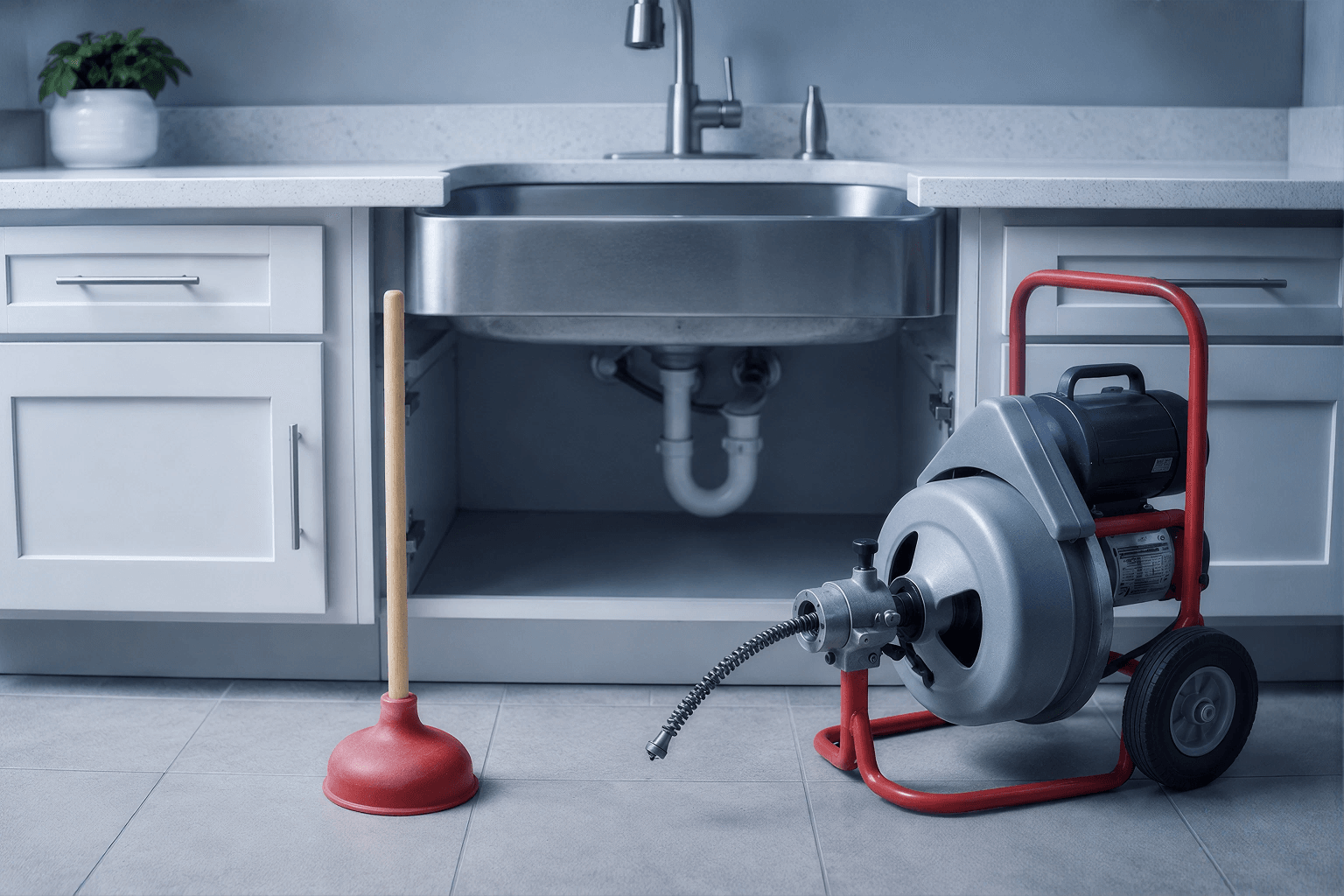
Start with a plunger—they work on more than toilets. Use a cup plunger for sinks (cover the overflow hole) and a flange plunger for toilets. Drain snakes (manual or drill-powered) physically break up and retrieve clogs. Enzyme cleaners break down organic matter safely. Hot water with dish soap helps dissolve grease. Baking soda and vinegar create fizzing action for minor buildup. Avoid chemical drain cleaners—they damage pipes over time.
When to Call a Professional
Call a plumber when multiple drains are slow simultaneously, clogs keep returning, you hear gurgling sounds, smell sewage, or DIY attempts fail. These signs indicate main line or sewer problems requiring professional equipment like motorized snakes, hydro jetters, or camera inspection.
Call a plumber when: multiple drains are slow or clogged simultaneously (main line issue), clogs keep returning despite clearing, you hear gurgling sounds from drains, sewage odors are present, DIY attempts haven't worked after reasonable effort, or the clog is in a main line or sewer. Professional equipment and expertise are necessary for deeper, more serious clogs.
What Professional Drain Cleaning Offers
Professional plumbers use motorized drain snakes for deep blockages, hydro jetters ($350-$600) that scour pipes with high-pressure water, and video cameras ($100-$300) to see exactly what's causing problems. They identify root intrusion, pipe damage, and bellied sections—solving the underlying issue, not just the immediate clog.
Professionals bring industrial-strength equipment: motorized snakes that clear deep blockages, hydro jetters that scour pipes clean with high-pressure water, and video cameras that show exactly what's causing problems. They can identify issues you can't see: tree root intrusion, pipe damage, and bellied sections where debris accumulates. Professionals solve the underlying problem, not just the immediate symptom.
The Cost Comparison
DIY drain cleaning costs $10-50 for tools (plunger, snake, enzyme cleaner). Professional drain cleaning costs $100-$250, hydro jetting $350-$600, and camera inspection $100-$300. Failed DIY followed by professional service costs more than calling a pro first—factor in your time and the risk of worsening the problem.
DIY costs: basic plunger ($10-20), drain snake ($20-50), enzyme cleaner ($15-25). Professional costs: basic drain cleaning ($100-250), hydro jetting ($350-600), camera inspection ($100-300). While DIY is cheaper when it works, failed DIY attempts followed by professional service cost more than calling a pro initially. Consider the value of your time and frustration threshold.
Preventing Future Clogs
Prevent drain clogs by using drain screens to catch hair and debris, never pouring grease down drains (it solidifies in pipes), running hot water after each use, and using monthly enzyme treatments. Flush only waste and toilet paper. These simple habits dramatically reduce clog frequency.
Whether you DIY or call a pro, prevention is the best strategy. Use drain screens to catch hair and debris. Never pour grease down drains—it solidifies in pipes. Run hot water after each drain use. Monthly enzyme treatments maintain clear drains. Avoid flushing anything but waste and toilet paper. These habits reduce clogs dramatically regardless of drain cleaning method.
Need Professional Help Now?
Plumbing problems get worse over time. Our network of licensed plumbers is available 24/7 for emergency service.
Call (833) 855-0466